
Learn what iron ochre is, how to spot the warning signs and what you can do about it.
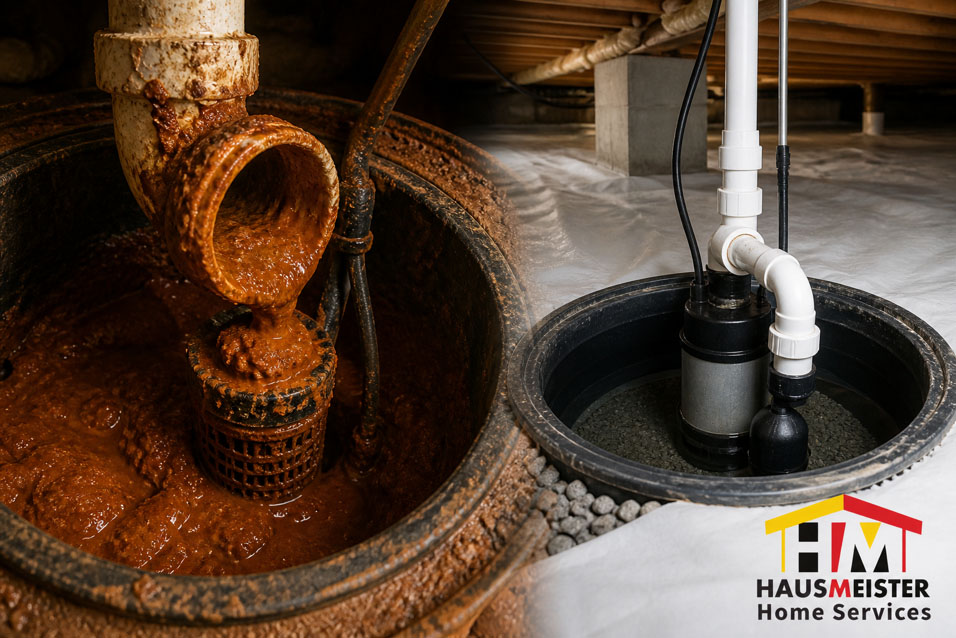
If you’ve pulled open a sump lid or cleaned out a discharge line and found a slick, rust-colored, gel-like coating, you’re looking at iron ochre. It’s one of the most common (and most misunderstood) reasons a perfectly good crawlspace drainage system starts underperforming just a few years after installation, and it’s especially common here in the Pacific Northwest where high groundwater and iron-bearing soils overlap.
What Is Iron Ochre?
Iron ochre is a slimy, rust-colored buildup that develops naturally in some soils and groundwater. It forms when naturally occurring iron bacteria feed on dissolved iron in the water. As the bacteria interact with oxygen, they produce a thick, sticky, orange-to-reddish-brown gel that can accumulate inside drainpipes, sump basins, and foundation drainage systems.
Unlike sand or sediment, iron ochre has a gelatinous texture that tends to cling to surfaces rather than simply wash away. One of the most noticeable signs is an orange or reddish-brown slime or staining in a sump basin, around a sump pump, or along drainage components. You may also notice a faint metallic or musty odor.
Sometimes the first indication isn’t the buildup itself, but a change in how the drainage system is performing. A sump pump may begin running more frequently, struggle to operate properly, or fail sooner than expected. You may also notice recurring dampness or standing water in a crawlspace even though a drainage system is already in place.
If you see these signs, particularly the distinctive orange or rust-colored residue, it’s worth having the crawlspace and drainage system evaluated to determine whether iron ochre may be contributing to the problem.
How Iron Ochre Affects Your Crawl Space Drainage System
Because iron ochre sticks to pipes, sump basins, pumps, and other drainage components, it continues to build up over time. Unlike ordinary sediment that can often be flushed away, iron ochre gradually narrows the path that water needs to travel.
Crawl space drainage systems are especially susceptible because they operate in damp conditions where iron ochre is most likely to form. As the buildup increases, water has a harder time reaching the sump pump and being carried away from the home.
If left untreated, iron ochre can lead to many problems, such as:
- Restricted flow through foundation drainpipes, preventing water from reaching the sump basin efficiently.
- Buildup on sump pumps and float switches, causing the pump to cycle improperly or stop working altogether.
- Clogged discharge pipes or check valves that prevent water from being carried away from the home.
- Persistent moisture beneath the home that can damage insulation, vapor barriers, wood framing, and create conditions that encourage mold growth.
Iron ochre isn’t considered a health hazard like mold or sewage contamination. The real concern is the effect it can have on your home’s drainage system. Think of it like plaque building up inside an artery. It develops gradually over time, often without noticeable symptoms, until one day it restricts water flow enough to create a problem.
Iron Ochre Requires a Different Approach to Drainage
When iron ochre is present, installing a standard crawlspace drainage system may not be enough. Because the buildup can collect inside drain lines, sump basins, pumps, and other components, the system needs to be designed with the conditions beneath the home in mind.
Depending on the severity of the iron ochre and the amount of groundwater moving through the crawlspace, this may mean using different types of drainage pipe, changing how water moves through the system, or adding additional cleanouts so the lines can be accessed and maintained more easily.
In more severe situations, additional components may be needed to help separate some of the sludge from the water before it reaches the sump pump. The goal is to keep the entire drainage system functioning, not simply protect or replace the pump.
These additional considerations can make an iron ochre drainage system more expensive to install and maintain than a standard system. Inspections may also need to be performed more frequently depending on how quickly the buildup develops. While that means investing more in the system upfront and in ongoing maintenance, properly designing and maintaining the drainage system can help prevent repeated pump failures, drainage backups, crawlspace flooding, and the much greater expense of water damage to the home.
How Hausmeister Home Services Can Help
Because iron bacteria and minerals occur naturally in the soil and groundwater, iron ochre cannot be permanently eliminated. That doesn’t mean it has to become a major problem. A drainage system designed for iron ochre conditions, combined with regular inspection and maintenance, can help manage buildup and keep water moving properly. The goal isn’t to eliminate iron ochre, but to keep it from interfering with your drainage system.
When we inspect, install, or service a crawlspace drainage system where iron ochre is present, we look at the entire system and the conditions beneath your home, including:
- Evaluating your property’s drainage conditions. Every home is different. We consider the severity of the iron ochre, soil and groundwater conditions, water flow, and the existing drainage system when determining the appropriate solution.
- Designing the system with iron ochre in mind. Depending on the conditions, this may require different drainage materials, additional cleanouts, changes in how water moves through the system, or other components that make buildup easier to manage and the system easier to maintain.
- Looking beyond the sump pump. Repeated pump problems may be a symptom of a larger drainage issue. We evaluate drain lines, basins, pumps, float switches, discharge components, and water flow to identify where buildup may be affecting performance.
- Establishing the appropriate maintenance schedule. The severity of iron ochre varies considerably from one property to another. Some systems may require annual service, while more severe conditions may need to be inspected and maintained more frequently.
While iron ochre can make a crawl space drainage system more complex and more expensive to install and maintain, addressing the conditions properly can help prevent repeated pump failures, clogged drainage lines, crawlspace flooding, and potentially much more costly water damage.
If you’ve noticed rust-colored slime in your sump basin, recurring moisture in your crawl space, or a sump pump that seems to be working harder or failing more often than it should, Hausmeister Home Services can evaluate the entire drainage system and recommend an approach based on the conditions beneath your home.